


Pahadi Badri Cow Ghee (Desi Pahadi Ghee) | My Pahadi Dukan
MRP Inclusive of all taxes
CERTIFICATE

Pahadi Badri Cow Ghee – Traditional Bilona Ghee from Uttarakhand
Pahadi Badri Cow Ghee is a traditional desi ghee made from the milk of free-range Badri cows from the Himalayan region of Uttarakhand. Prepared using the traditional Bilona method, this Pahadi ghee offers a rich aroma, smooth texture and distinctive flavour suited to everyday Indian cooking.
Badri cattle are recognized as an indigenous breed of Uttarakhand by ICAR-NBAGR. My Pahadi Dukan brings this traditional Himalayan dairy product to customers looking for authentic Badri Cow Ghee, Bilona Ghee and Pahadi Desi Ghee.
What Makes Badri Cow Ghee Special?
Made from Free-Range Badri Cows
This ghee is made from milk sourced from free-range native Himalayan Badri cows. Badri cattle are an indigenous breed associated with the Himalayan region of Uttarakhand.
Traditional Bilona Method
The ghee is prepared using the traditional Bilona churning method. Traditionally, milk is converted into curd, the curd is churned to obtain butter, and the butter is then heated to produce ghee.
This traditional preparation gives the ghee its characteristic aroma, flavour and texture.
Sourced from Uttarakhand
The product is sourced from the Himalayan region of Uttarakhand, connecting the ghee with the region's traditional dairy practices and Pahadi food heritage.
Tested for 250+ Parameters
Quality testing is an important part of this product's positioning. The product page provides laboratory reports covering heavy metals, pesticides and nutritional parameters, with testing stated to cover 250+ parameters.
Customers can access the available laboratory reports directly from the product page before purchasing.
Pahadi Badri Cow Ghee Benefits
Badri Cow Ghee is a versatile source of dietary fat and can be incorporated into a balanced diet and traditional Indian meals.
- Provides dietary fat and energy
- Adds rich flavour and aroma to food
- Suitable for traditional Indian cooking
- Works well with dal, rice, roti and khichdi
- Can be used in homemade sweets and traditional recipes
- Fits naturally into traditional Indian food practices
- Made using a traditional Bilona preparation process
Note: Ghee is calorie-dense and should be consumed in appropriate quantities as part of a balanced diet.
Laboratory Tested for Quality
My Pahadi Dukan provides laboratory reports for this Badri Cow Ghee covering multiple quality and nutritional parameters.
Available Test Reports
- Heavy Metals Testing
- Pesticide Testing
- Nutrition Testing
- Nutritional Information
- 250+ Parameters Tested
Badri Cow Ghee vs Regular Ghee
| Feature | Pahadi Badri Cow Ghee | Regular Ghee |
|---|---|---|
| Cow breed | Badri cow | Breed may vary |
| Origin | Himalayan region of Uttarakhand | Origin varies |
| Preparation | Traditional Bilona method | Manufacturing method varies |
| Sourcing | Free-range Badri cows | Source varies |
| Flavour | Rich and naturally aromatic | Varies by product |
| Testing | 250+ parameters stated for this product | Depends on the brand |
| Culinary use | Cooking and traditional recipes | General cooking |
Why Buy Badri Cow Ghee from My Pahadi Dukan?
Made from milk of free-range native Himalayan Badri cows
- Sourced from the Himalayan region of Uttarakhand
- Prepared using the traditional Bilona method
- Laboratory testing available for 250+ parameters
- Heavy-metal and pesticide testing reports available
- Nutritional testing information available
- Free from additives and preservatives, as stated for the product
- Supports traditional Himalayan dairy practices
- Available in 250ml, 500ml, 1L and 2L packs
- Delivered by My Pahadi Dukan
Available Pack Sizes
| Pack Size | Best For |
|---|---|
| 250ml | Individual use or first-time buyers |
| 500ml | Regular household use |
| 1L | Families and frequent use |
| 2L | Larger households and regular consumption |
How to Store Pahadi Badri Cow Ghee
Store the ghee in a cool, dark and dry place. The product does not require refrigeration.
For maintaining quality:
- Keep the container properly closed
- Use a clean and dry spoon
- Keep away from moisture
- Avoid direct sunlight
- Avoid introducing water into the container
Ghee can naturally become softer in warm temperatures and firmer in cooler conditions. Changes in texture caused by temperature do not necessarily indicate a quality problem.


Pahadi Badri Cow Ghee (Desi Pahadi Ghee) | My Pahadi Dukan


Why Us?




Its tastes good
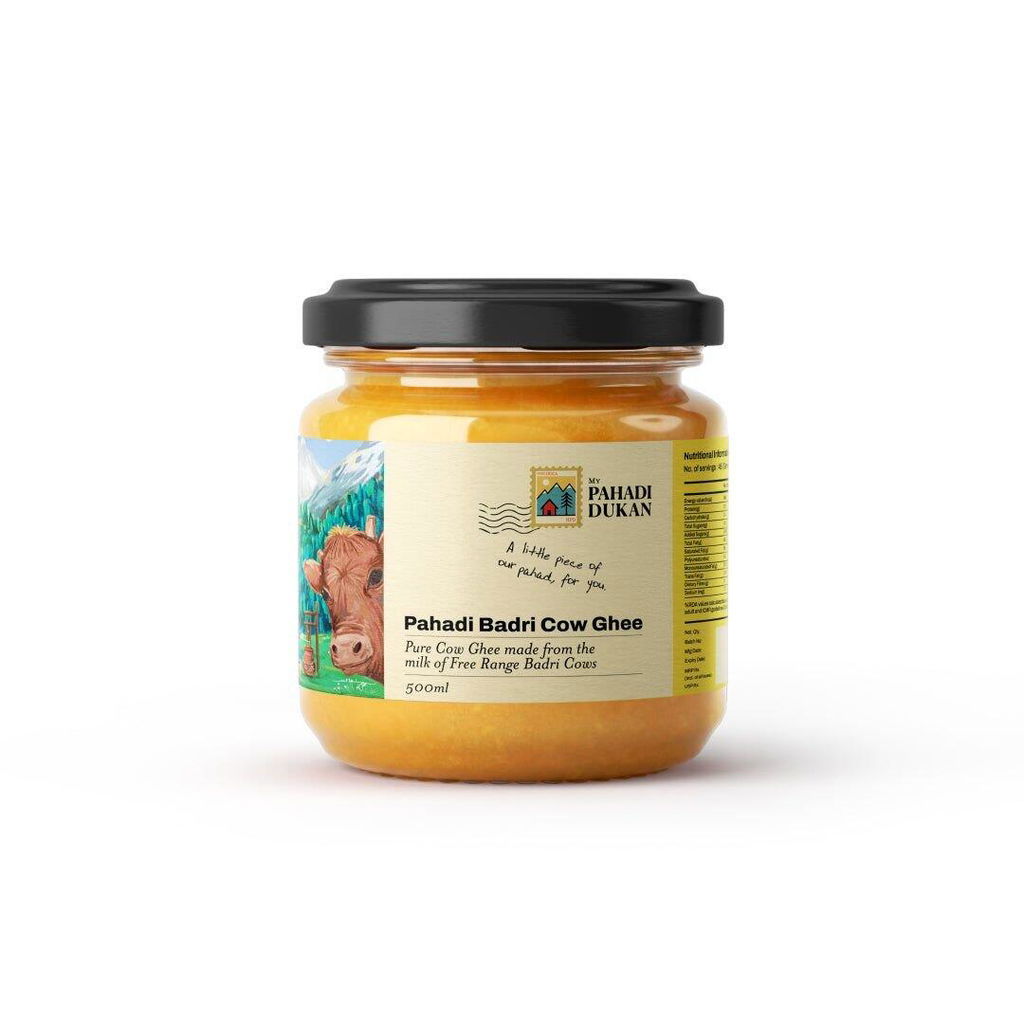
On my request they send me fresh lot . It’s was good in taste just like desi cow ghee and fresh . They have lab reports also , but they don’t have there own Gaushala, it’s process of milk collection. So genuinely it’s Badri Cow Ghee that is question .
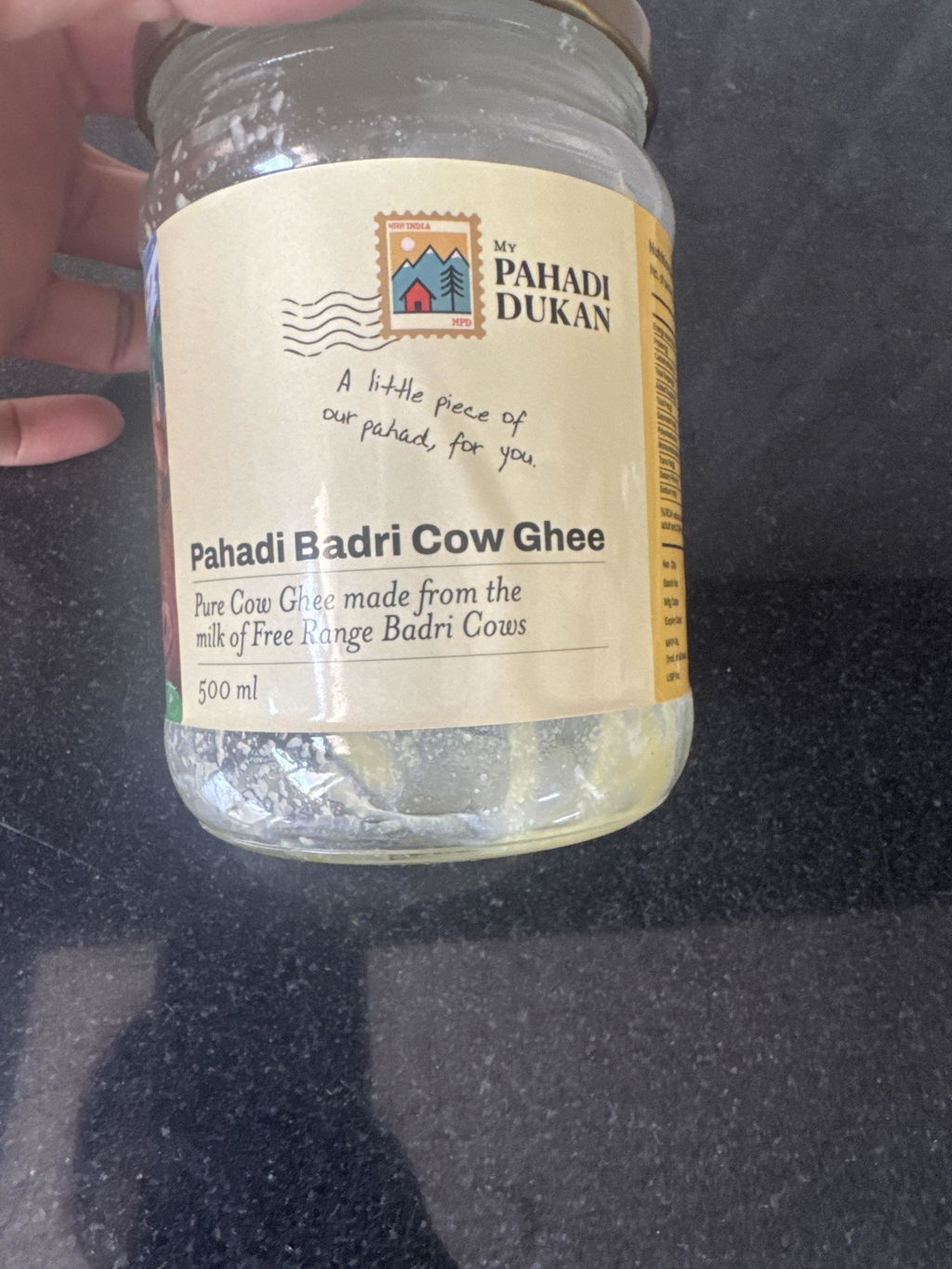
The aroma, Texture and consistency of this ghee is superb. We were looking for this purity from a long time.
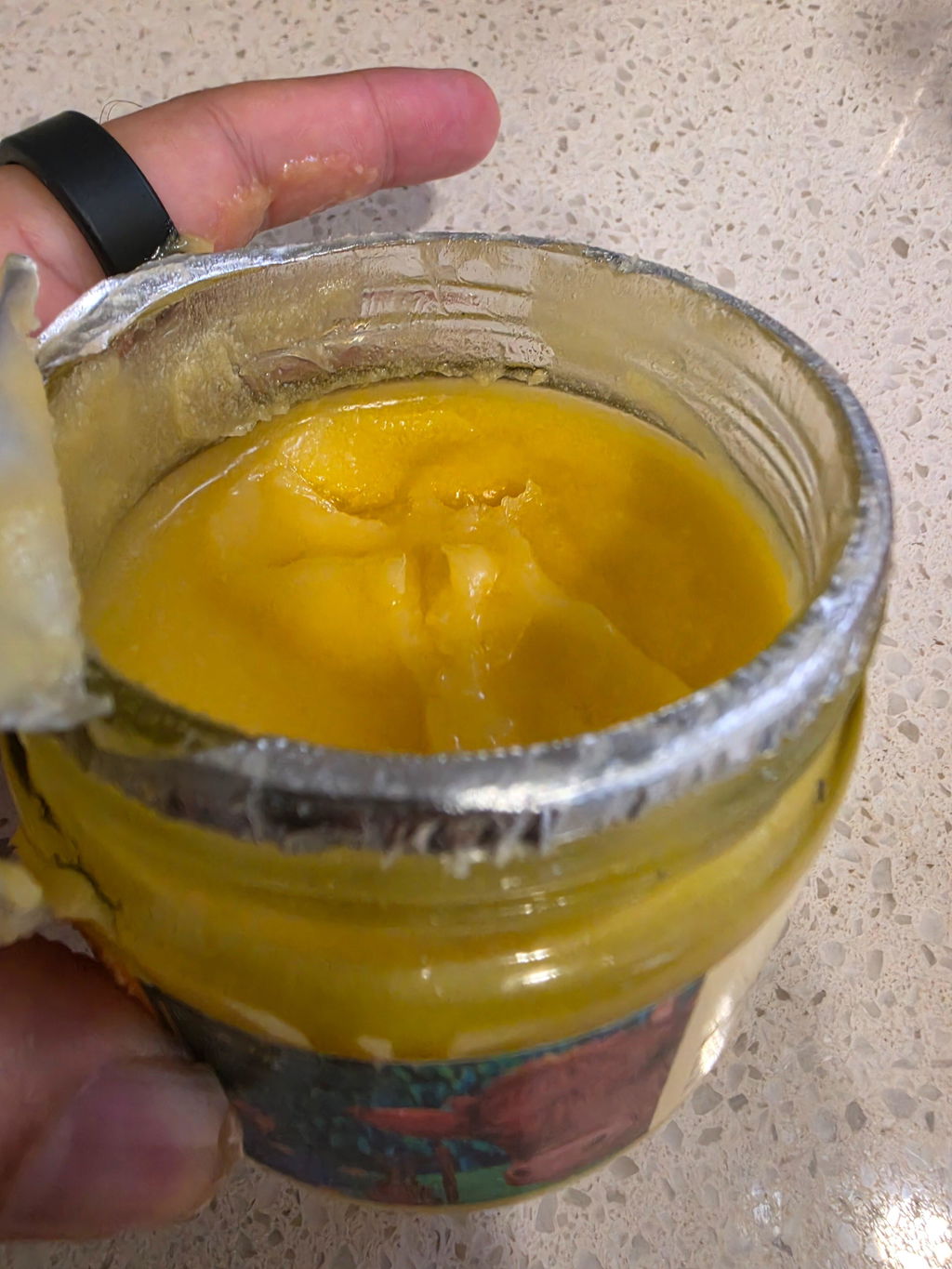
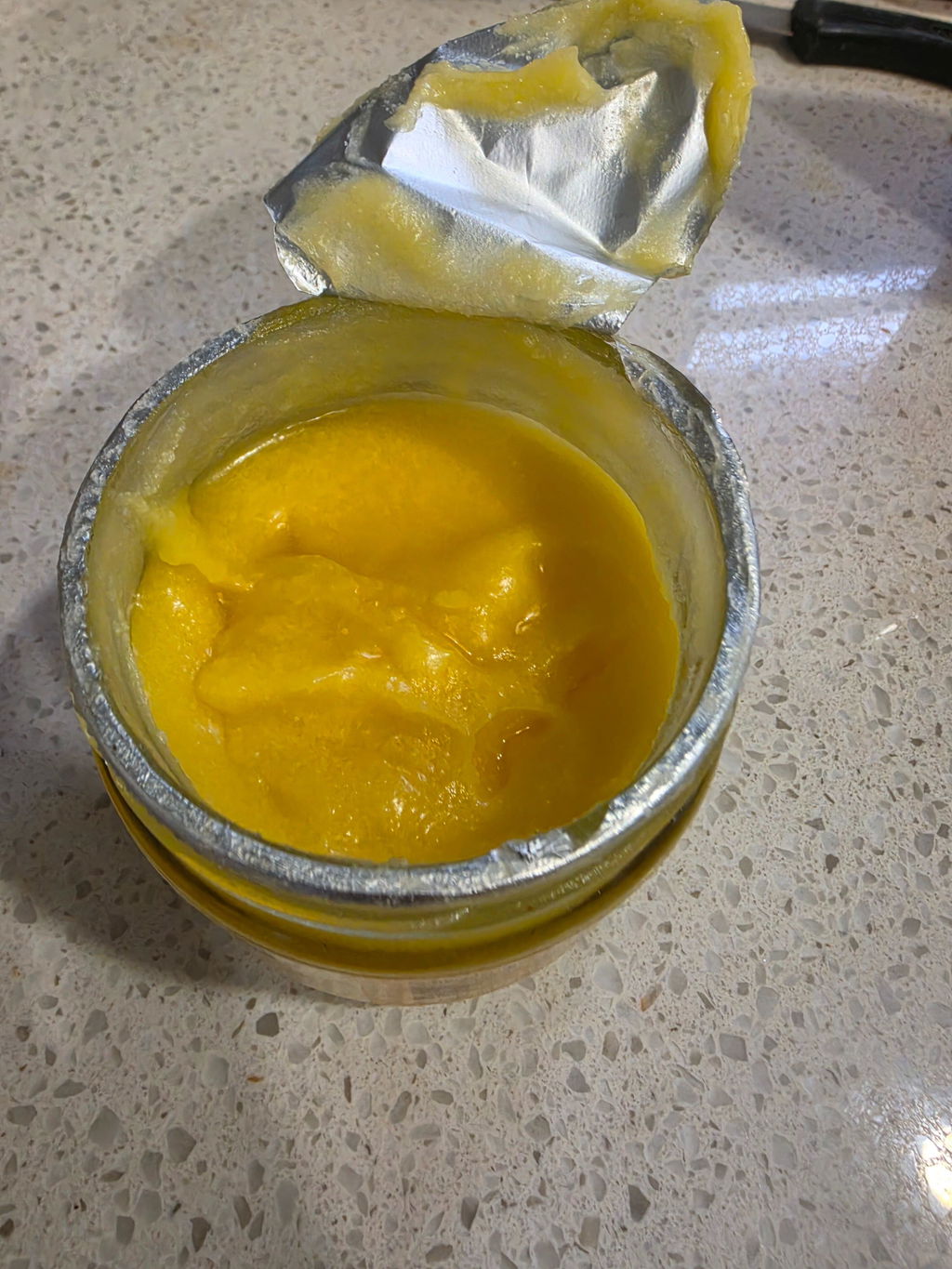
> I ordered Pahadi Badri Cow Ghee (Desi Pahadi Ghee) from My Pahadi Dukan. Product is very pure, natural golden colour with perfect granular texture and authentic pahadi aroma. Taste is completely different from market ghee, feels like pure desi ghee. Used for dal, roti and coffee - flavour is excellent and light on stomach. Packaging was secure with no leakage. Very satisfied as a customer, will order again. Thank you My Pahadi Dukan.
Excellent and very genuine product
Nice
Good source of healthy lifestyle
⭐⭐⭐⭐⭐ Very good quality ghee! It has a nice aroma, rich taste, and great texture. Perfect for daily cooking and making parathas. Totally satisfied with the product. Value for money! 👍
Awesome
Disappointed, waste of money and time and health,
This is adultrated
Good 👌
I bought from two brands for comparison of cow ghee and found this better
Awesome taste, texture and aroma transports you in a different zone. Difficult to explain but the energy is quite natural.
Yes, the packaging does have good scope for improvisation and branding. The price is enough strong to absorb that cost if the makers are willing to participate with profit. For instance, we were using Bharat Vedica till now as it is a perfect match of taste and packaging we loved the taste of BCG more but packaging is certainly a miss.
Great taste and aroma
Pahadi Badri Cow Ghee (Desi Pahadi Ghee) | My Pahadi Dukan
Very very good product
product is awesome, Quality of the Cap of the jar leaves a doubt on the product as a whole
Perfect
From last one year I have been using your seabuckthone this is first time I ordered ghee from you and it's excellent from now on I am your one of loyal customer, thank you
I have purchased the ghee very recently and found it to be very authentic. The ghee tastes good and smell nice.
500ml for ₹1800 is not cost effective. Margin toh Kam Karo
My product not yet delivered, courier service not booked for home delivery
Hi Yogesh, we sincerely apologize for the inconvenience caused. As per the latest update, your order has been successfully delivered. For any further assistance, please contact us at support@mypahadidukan.com or 9310169090. Thank you for your patience and understanding.
It tastes great!
Great
Texture and smell is so good that it reveals the purity of ghee
Your product is indeed very good !
However the delivery first of all was slow, and when it did happen, the person (delivery partner) kept waiting at the door very suspiciously and then asked for some money for himself. Which kind of took me aback !
I decided at that point that I am not ordering again from this company, however, when i tried the Ghee it was very good. It adds a unique flavour to our food and makes everything delicious. Reminded me of my childhood when my mother and grandmother used to make ghee at home and the taste of that ghee was similar.
So please do something about your delivery services if you expect return demand.
Excellent. I will like to order again
Excellent
Best cow ghee I have ever tried
First time taste result is best....