





FILTERS
Availability
Price
Filters
Select Availability
Select Price




Sort By
Sort By
Watch & Buy
Frequently Asked Questions
Yes, it's grown on the Karewa highlands around Pampore and carries the Geographical Indication tag granted to Kashmir saffron in 2020 - a legal confirmation of origin. We also grade it ourselves and sell only A1 Mongra, the hand-sorted, top grade.
Because of how little saffron one flower gives, and how much work it takes to get it. Each flower gives up only three threads, picked by hand before sunrise, one flower at a time. It takes tens of thousands of flowers to make a single kilo, and the whole harvest lasts just two to three weeks a year.
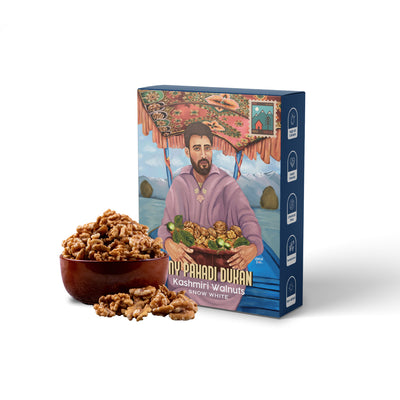
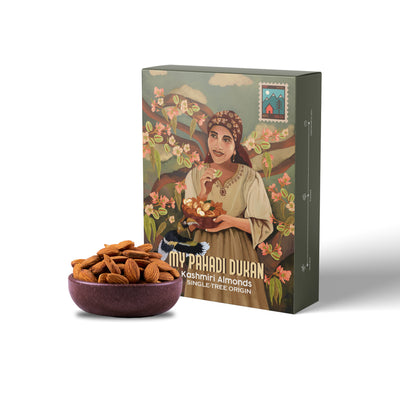
Kashmiri walnuts (Kagzi variety) have a paper-thin shell and a higher oil content, around 60-70% against roughly 40-50% in commonly available walnuts, which makes for a richer, softer kernel. Our almonds are Mamra, hand-harvested from single trees, so the taste stays consistent through a pack instead of varying nut to nut.
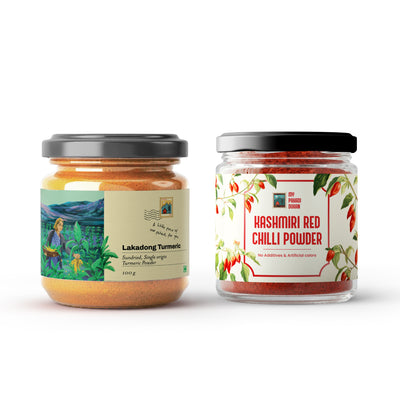
Most "Kashmiri chilli" sold in India is Byadgi chilli, grown in Karnataka, packed under the Kashmiri name because that's what shoppers look for. Ours is grown in the Anantnag, Kulgam, and Shopian belts of Kashmir. It's mild in heat and deep in colour, which is why it's used to redden a dish without making it hot.
Instead of a bulb with several cloves, this variety grows as a single clove, shaped like a small lotus bud, beneath a papery golden skin. It's grown at high altitude in Kashmir and harvested once a year, in spring. The smell is strong; the taste is milder than regular garlic.
Keep saffron in its sealed tin, away from light and heat, and it'll hold its colour and aroma for well over a year. Walnuts and almonds keep best refrigerated, since their higher oil content means they turn faster than drier nuts left at room temperature. Garlic and chilli powder just need a cool, dry, airtight jar.
Directly, wherever we can. We buy the batch from the family or the collective that grew it, at a fair price, and we don't rename what they make. For the products we don't grow or test ourselves, we still trace and name the source rather than buy anonymously off a trader's list.
