

Meghalaya, where the hills wear mist like a shawl that never lifts

(6 products)

Meghalaya, where the hills wear mist like a shawl that never lifts

(6 products)

Meghalaya means the abode of clouds, which is a polite way of saying it rains here in a manner that has to be seen to be believed. Mawsynram and Sohra trade the title of wettest inhabited place on Earth: roughly 11,000 mm of rain a year, 14 times what Delhi gets at 790 mm.

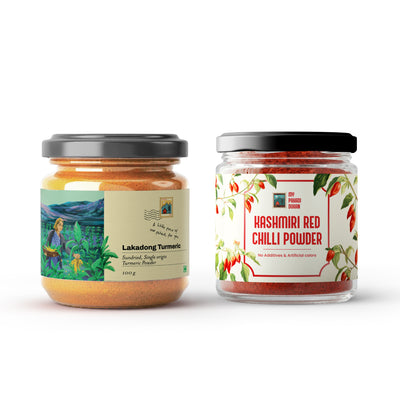
Ten months of this, on and off, is what a Lakadong turmeric root goes through before anyone digs it up. It comes out closer to burnt orange than yellow.

Mind you: It gets on everything it touches. Pick a spoon you're willing to sacrifice.

FILTERS

Availability

Price

₹0 ₹5000

Filters

Select Availability

Select Price

₹0 ₹5000

Sort By

Sort By

What do we bring from Meghalaya?

Cool climate, slow-growing cycles, mineral-rich soil, and heavy rain - that's what gives these crops their character, and what keeps them hard to come by. That scarcity shows up in the price as well. 

Lakadong turmeric - 8-10% curcumin, GI-tagged, grown around Nongbah and Shangpung, dug up after ten months, then boiled, sun-dried, and ground into powder.

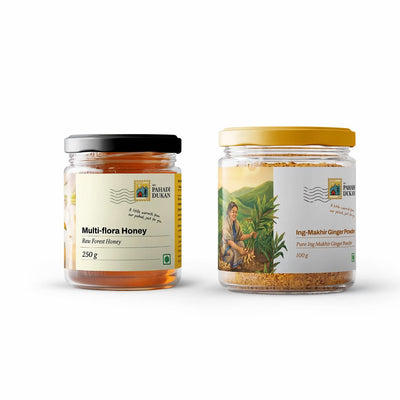
Ing Makhir Ginger - Sying Makhir in Khasi; it hits sharp on the back of the throat, then turns warm and faintly sweet. Close to 2% gingerol, it is grown in the Jaintia Hills at 600 to 1,500 metres.

Cassia Cinnamon Sticks -  The Khasi call the tree Dieng-lorthia. Break a stick before you cook with it. Good cassia snaps, dry and sharp, and the smell arrives before the sound does.

Long Pippali (Pepper): Ask people how pippali tastes, and you'll get a blank look - a strange fate for a spice this good. It's sweeter than black pepper and more citrusy, with a tingle that lands late.

Products we make are lab-tested. Products we source aren't, but we can always tell you exactly where they came from.

These are small crops from small plots, and there is never very much of any of it. What there is, we're glad to be able to send you.

Watch & Buy

Frequently Asked Questions

The Lakadong turmeric and the Ing Makhir ginger are both from the Jaintia Hills, and both carry GI tags. The cinnamon and the pippali come from partners working in the state.

One harvest a year, small plots, and everything picked and dried by hand. Turmeric alone stays ten months in the ground before anyone digs it. Supermarket spices are blended from many farms and bred for yield rather than flavour, which is cheaper to do and tastes like it.

Strength, mostly. Lakadong runs 8 to 10% curcumin against the 2 to 3% in ordinary turmeric, and Ing Makhir carries close to 2% gingerol where common ginger manages 0.1 to 1%. You'll notice it in colour first, then in how much less you reach for.

Yes, roughly half to start. Too much Lakadong turns a dish faintly bitter, and that's hard to walk back, so add more at the end if you miss it. The ginger and the pippali are the same story. Whole spices are more forgiving, since you can pull them out.

Our own products - the Lakadong turmeric and the Ing Makhir ginger - come with lab test reports covering safety, composition, and regulatory compliance, available on their product pages. The cinnamon and pippali come from other makers we buy directly from.

True Lakadong is GI-tagged and grown only around Nongbah and Shangpung. It tests at 8-10% curcumin, roughly three to four times that of ordinary turmeric. Most turmeric sold as "Lakadong" online is regular turmeric. A simple check: drop a pinch into a glass of water. Pure turmeric settles at the bottom with a clean separation; if the water clouds up or turns unnaturally bright, it's been cut with something else.

No, they're related but different species. Cassia is stronger, sharper, and darker in colour; normal cinnamon is milder, lighter, and fragile.